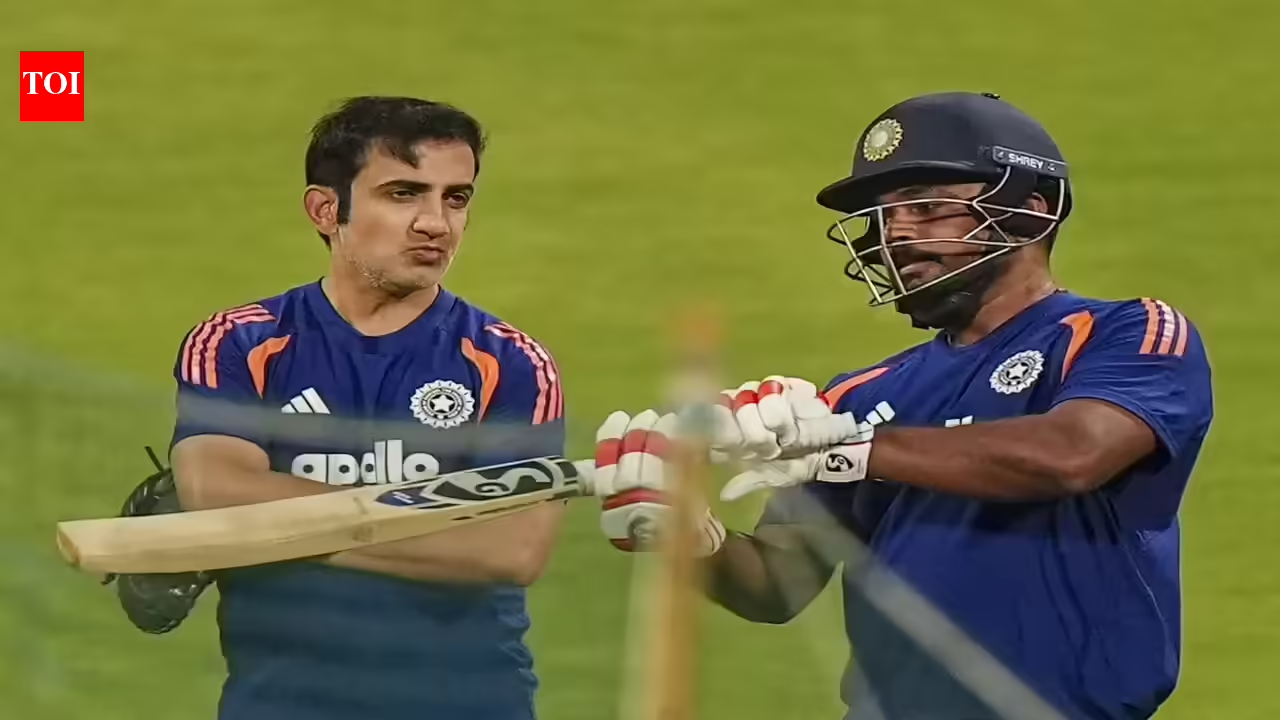
India’s recent T20 World Cup victory was a story of redemption, but perhaps no individual journey was as dramatic as Sanju Samson’s. After missing four of India's first five matches, Samson returned to the lineup during the Super Eight stage against Zimbabwe. He didn't just play; he dominated, smashing three consecutive half-centuries in high-pressure games to be named Player of the Tournament.
While many viewed Samson’s late inclusion as a gamble, Indian head coach Gautam Gambhir sees it differently. According to Gambhir, the decision was purely tactical, born from a deep understanding of player psychology and squad depth.
The "Break" That Revived a Career
Before the tournament, Samson was expected to be a mainstay at the top of the order. However, a lean patch during the home series against New Zealand created a dilemma. With Ishan Kishan in scorching form at number three, the management decided to start with Kishan and Abhishek Sharma as the opening pair.
Gambhir revealed that the decision to bench Samson early on wasn't because he was "out of form."
"Me and the captain never felt Sanju was struggling," Gambhir explained. "We just felt that after the New Zealand series, he needed a mental break. Sometimes, leadership is about taking the pressure off a player so they can clear their head and come back stronger."
This strategy allowed India to utilize their immense squad depth. With Rinku Singh initially in the middle order, India had the luxury of experimenting. When the team eventually brought Samson back, it wasn't just to counter opposition off-spinners; it was to create the most explosive top three in world cricket.
The Math of Fearlessness: High Risk, High Reward
India’s campaign wasn't without its scares. A heavy 100-run defeat against South Africa in the Super Eight nearly knocked the hosts out. However, Gambhir insists that the "high-risk" approach—even when it fails—is the only way to win a T20 World Cup.
"If you start fearing defeat, you will never win," Gambhir said. "My philosophy with the captain was simple: we don't want to play 160-run cricket. I would rather the team get bowled out for 100 than settle for a safe 150. High-risk play is the only way you reach 250 or 260 runs."
This mindset was evident in how the players approached their personal milestones. In Gambhir’s dressing room, a quick-fire 97 is valued just as much as a slow 100.
Impact Over Milestones
Gambhir provided a concrete example of how traditional stats can hurt a team in the shortest format:
The 96-to-100 Trap: If a batter takes four singles to move from 96 to 100, the team loses approximately 20 potential runs due to lost momentum.
The "Impact" Rule: A player batting on 96 is encouraged to hit a six on the next ball. If they get out for 97, they are applauded for their bravery because those extra runs are what bridge the gap between a finalist and a champion.
| Metric | Traditional Approach | Gambhir's Philosophy |
|---|---|---|
| Target Score | 160–175 | 250+ |
| Personal 100s | Highly Valued | Secondary to Strike Rate |
| Reaction to Loss | Defensive/Cautious | Double Down on Aggression |
| Tactics | Balanced/Safe | High Risk/High Reward |
Building a Pipeline of Power
While Gambhir took the team over the finish line, he was quick to credit the foundation laid by his predecessors. He lauded the work of Rahul Dravid, VVS Laxman, and chief selector Ajit Agarkar for building a pipeline of talent that allowed India to field multiple winning combinations.
Whether it was playing two wrist-spinners or batting deep until number eight, India’s depth meant they were never pigeonholed into a single style of play.
Creating a New Identity
For Gambhir, this coaching stint isn't about maintaining a legacy; it's about building a brand. He wants the world to see the Indian T20 team as a group that "out-bowls and out-scores" everyone while remaining completely fearless.
"I don't believe in inheriting something; I believe in creating something," Gambhir said. "We have created a brand of cricket where the country can be proud of a group that doesn't fear losing. We spoke about this constantly in the dressing room. Changing that mindset is why we are standing here as champions."
The Final Word
India’s victory suggests that Gambhir’s "tactical" approach has effectively killed the era of conservative T20 cricket. By backing Sanju Samson at the right moment and encouraging a 120-ball sprint rather than a 20-over marathon, India has set a new benchmark for the world to follow.
The message is clear: the modern T20 game belongs to the brave. And under Gambhir, India is the bravest of them all.