In every high-stakes moment, athletes face a fundamental choice: do you play it safe to protect what you have, or do you take a risk to grab something more?
A World Cup final is the ultimate pressure cooker, and India made their intentions clear from the very first over. The defining moment came in the third over of the match. Abhishek Sharma, who had struggled for form throughout the tournament, danced down the pitch to the first ball of pace he faced from Jacob Duffy.
India had lost the toss and was forced to bat first on a pitch expected to get easier for the team batting second. In the past, an Indian opener might have started cautiously to avoid a collapse. Abhishek didn't even connect with that first big swing, but the result didn't matter. What mattered was the message: on the biggest night of their lives, in front of a massive home crowd, India was not going to play scared.
Breaking the 160-Run Habit
India finished their innings with a staggering 255 runs. This followed a similar performance in the semifinal in Mumbai, where they posted 253. In both knockout games, they lost the toss, batted first, and refused to slow down.
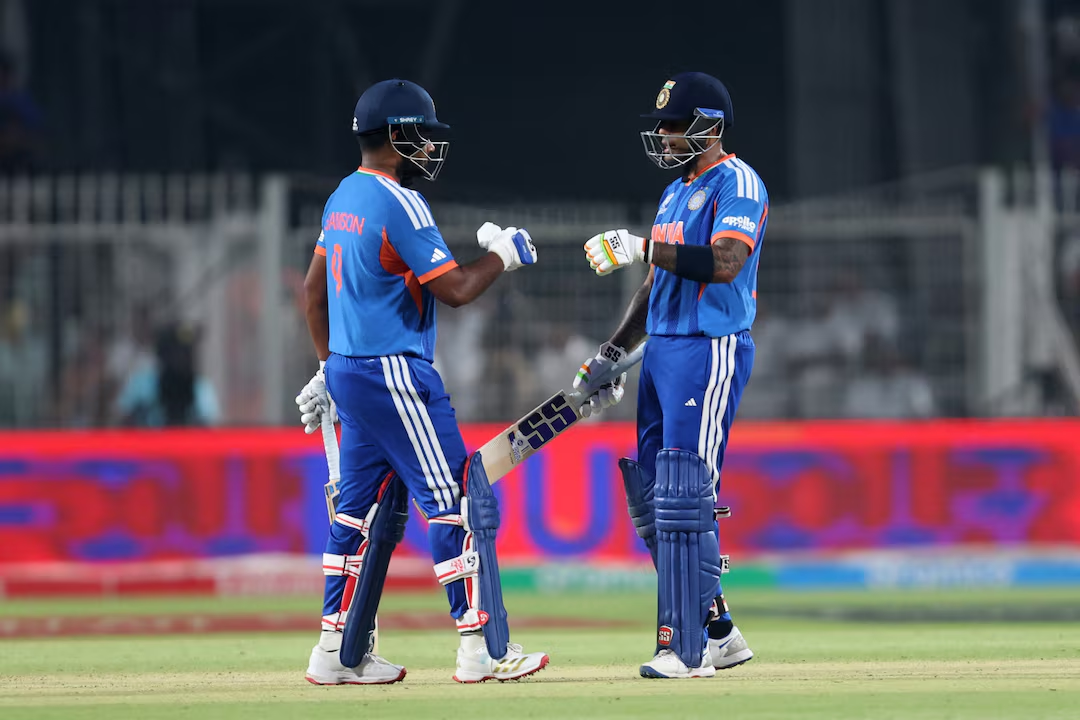
The foundation was laid by Abhishek Sharma and Sanju Samson, who combined for 92 runs in the Powerplay. This is the highest score ever recorded in the first six overs of a T20 World Cup match. By the time New Zealand could even think about slowing the game down, the match was already slipping away from them.
Head coach Gautam Gambhir later explained that this wasn't an accident. Since taking over alongside captain Suryakumar Yadav, the duo has preached a "high risk, high reward" mantra.
"The most important thing was that we didn't want to be afraid of losing," Gambhir said after the trophy presentation. "For too long, we played '160-170 run' cricket. I told the boys I would be happier if we got bowled out for 110 trying to be aggressive than if we played conservatively. Our goal was always 250."
Winning the "Milestone" Battle
In India, cricket is more than a sport; it is a national obsession. Players often feel immense pressure to protect their spots in the team, which can lead to "milestone chasing"—batting safely when near a 50 or a 100 to ensure a good personal stat.
Gambhir and Yadav spent two years trying to erase that mindset. They wanted players to focus on the scoreboard, not their personal averages.
"Milestones don't matter; trophies do," Gambhir stated firmly. "We talked about what happens when a batter is on 94. Does he have the courage to try and hit a six to get his hundred in one ball, or does he take four balls to get there safely? Those 10 or 20 runs are often the difference between winning and losing a World Cup."
The Road Was Not Always Smooth
While the final looked easy, India’s journey to the trophy was full of obstacles. The team’s aggressive style was tested multiple times during the tournament:
USA & Namibia: India survived close calls on pitches that favored bowlers more than expected.
The Pakistan Clash: In spin-friendly Colombo, Pakistan forced India to dig deep and adjust their tactics.
The South Africa Defeat: India suffered their first loss in an ICC white-ball match since 2023 against the Proteas, a result that many thought would make the team play more cautiously.
Instead of retreating, India leaned further into their aggressive style. They ended up being the last team to qualify for the knockout stages, but they entered the semifinals with a "nothing to lose" attitude.
A Night of Three Fifties
In the final, the plan came together perfectly. Abhishek Sharma reached his half-century in just 18 balls. Even when he was dismissed, the momentum didn't stall. Ishan Kishan stepped in and immediately began finding the boundary, ensuring the run rate stayed sky-high.
Meanwhile, Sanju Samson played the anchor role—but in a modern way. He balanced raw power with a calm presence, scoring 89 off 46 balls. This became the highest individual score ever in a T20 World Cup final. Remarkably, it was the third time in a row Samson fell just short of a century, but true to the team's new philosophy, he never slowed down to reach the milestone.
The Final Numbers: A New Era
| Phase of Innings | Runs Scored | Run Rate |
|---|---|---|
| Powerplay (0-6 overs) | 92 | 15.33 |
| Middle Overs (7-15 overs) | 112 | 12.44 |
| Death Overs (16-20 overs) | 51 | 10.20 |
| Total | 255/6 | 12.75 |
When a team posts 255, the pressure on the opposition is immense. Even a world-class bowling attack like New Zealand’s found it impossible to defend. And with Jasprit Bumrah leading the Indian defense, a target of 250+ is almost impossible to chase.
A Legacy of Courage
"ICC tournaments are usually played differently than bilateral series," Gambhir noted. "We wanted to change that. Scoring over 250 in both a semifinal and a final shows the quality and bravery of this group."
This victory feels like the arrival of a new generation. These players grew up in the IPL era, where high scores and loud crowds are the norm. They are comfortable with risk because they have been playing high-stakes cricket since they were teenagers.
New Zealand captain Mitchell Santner summed it up best: "Winning a World Cup in your own country is one of the hardest things to do. There is so much pressure. India should be very proud of how they played tonight."
By choosing to reach for more instead of protecting what they had, India didn't just win a trophy—they changed the way the game is played on the biggest stage.