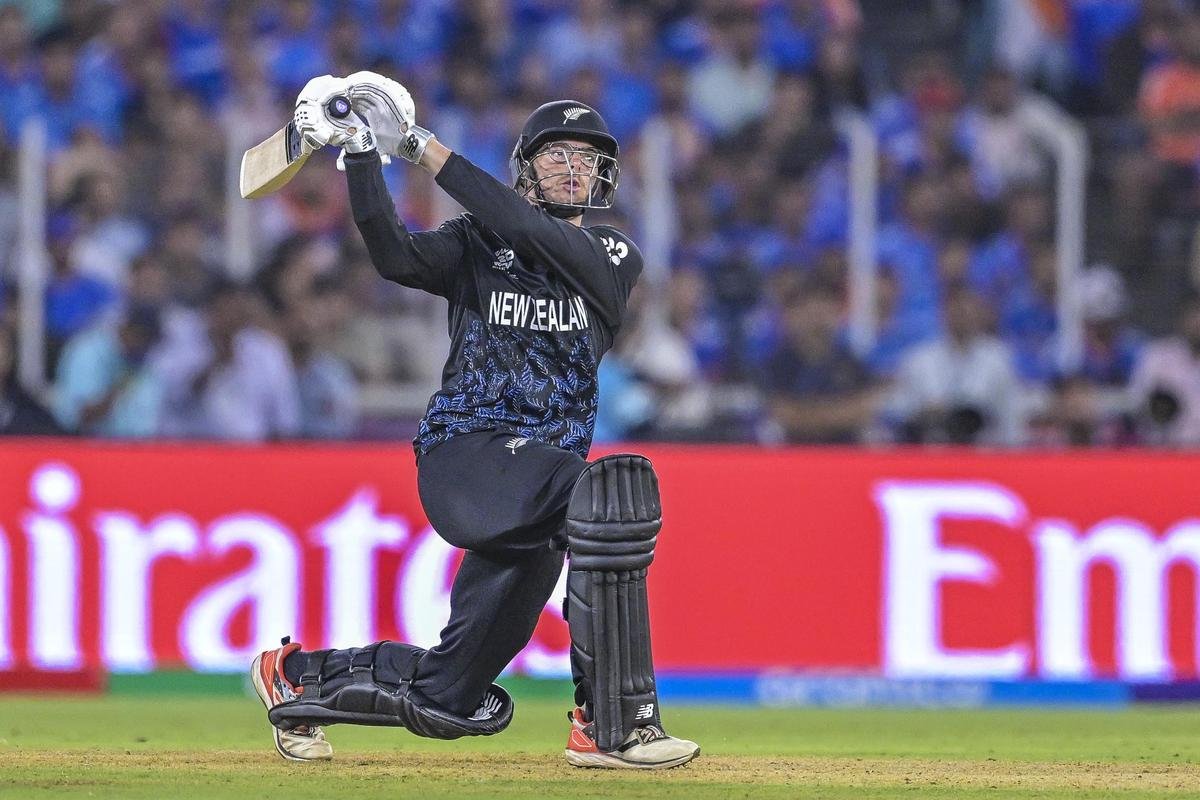
In the high-speed world of T20 cricket, tactical small wins often decide the biggest matches. Usually, captains start a game with a "fine" field—placing two men deep behind the wicket at third man and fine leg. This is done because a fast, shiny new ball often flies off the edge of the bat toward the boundary.
However, when the pitch is slow, captains have to think differently. We saw this in the 2023 ODI World Cup final when Pat Cummins placed a deep point for Rohit Sharma from the very first ball. He knew the ball wouldn't carry fine; it would go squarer.
Fast forward to the 2026 T20 World Cup final in Ahmedabad. The stage was the same, but the pitch was different. This was a "mixed-soil" track—a blend of red and black soil that offered more bounce and pace than the sluggish surface seen years prior.
The Script Santner Expected
New Zealand captain Mitchell Santner had a clear vision. The night before, he predicted a flat, high-scoring deck. Unlike Cummins, Santner stuck to tradition. He kept his protection fine, trusting Matt Henry to lead the attack with a conventional Powerplay field.
Santner also knew exactly what India was going to do. Throughout their recent bilateral series and this World Cup, India’s openers had been playing a "no-fear" brand of cricket. They don't just attack; they overwhelm.
The problem for the Black Caps was that knowing the plan and stopping it are two very different things. By the time the first six overs were up, India had reached a staggering 92/0.
"You have to give credit to Sanju [Samson] and Abhishek [Sharma]," Santner said after the game. "Coming back from 90 in the Powerplay is nearly impossible. It was a great batting wicket, and the bowlers had very little help. If we had taken two wickets and squeezed them in the middle, we could have chased 220. But 256 was a different story."
Where the Bowling Plan Faltered
While India’s batting was world-class, New Zealand’s tactical choices played right into their hands. The gap between the two sides widened rapidly because of several small, compounding errors.
Matt Henry actually started well, bowling four consecutive dot balls. But on the fifth ball, Samson flat-batted a short delivery over the ropes. That single shot shifted the momentum, and New Zealand’s response was to start panicking with their variations.
The Slower Ball Trap
During the five overs of pace in the Powerplay, New Zealand’s bowlers used a slower ball nearly every third delivery. They were trying to take the pace off and hide the ball outside the off-stump. However, the execution was poor:
Lengths: They were either too full or too short.
The "Good Length" Gap: Only eight balls landed in the ideal "good length" area. India scored only 12 runs off those, but New Zealand rarely went back to that spot.
"There wasn't much swing or seam, so the guys were trying anything to get out of the hitting arc," Santner explained. "But when batters like Sanju, Abhishek, and Ishan Kishan are in that zone, there’s no such thing as a perfect plan."
Captaincy and Rotation Errors
By the fourth over, India was already at 51. Santner began shuffling his bowlers in a desperate search for a breakthrough. This led to a strange situation where New Zealand used four different bowlers in the first four overs.
This meant that Matt Henry—their most consistent wicket-taker—only bowled one over at the start. Additionally, Glenn Phillips bowled a single over that cost only five runs, yet he wasn't brought back for a second over in the Powerplay, despite being the only off-spin option available.
Santner defended the move, saying they were waiting for a wicket to bring Phillips back against the left-handers. "Abhishek played it very smart. He didn't take risks against the off-spinner and gave the strike to Sanju. When you aren't taking wickets, every choice feels like a challenge."
A Tale of Two Powerplays
The match was effectively over before the mid-innings break. Chasing 256 is a mountain for any team, but doing it against the best T20 side in the world is a different beast entirely.
Santner summed up the defeat simply: "They were 90 for none, and we were 40 for three."
| Team | Powerplay Score | Wickets Lost | Run Rate |
|---|---|---|---|
| India | 92 | 0 | 15.33 |
| New Zealand | 40 | 3 | 6.66 |
Reflecting on the Exposure
In a final, there is no place to hide. New Zealand entered the game with a plan that made sense on paper, but they lacked the discipline to execute it under the pressure of India’s aggression.
"When you play a team as good as India in a final, you have to be at your absolute best," Santner admitted. "We weren't, and we got exposed. We’ll look back at our options with the bat and ball and reflect, but the truth is you have to be perfect to beat them here."
On a night that belonged to India, the story was written in the first 36 balls. Santner read the pitch and the players correctly, but he couldn't stop the storm. Once India dominated that opening phase, the trophy had already started its journey to the Indian dressing room.