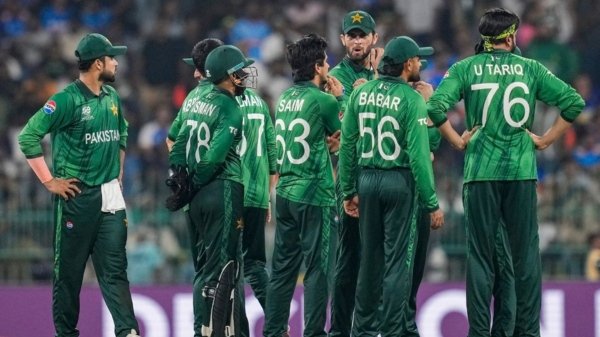
In a move that has sent shockwaves through the international cricket community, the Pakistan Cricket Board (PCB) has reportedly taken the extreme step of fining its national players. This decision follows a lackluster performance in the ongoing T20 World Cup 2026, where the team failed to reach the knockout stages. While cricket boards often face pressure to hold teams accountable, a direct financial penalty on an entire squad during a tournament is almost unheard of in the modern era.
The reports coming out of Pakistan suggest that the board’s patience has finally run out. After years of inconsistent results in major ICC events, the leadership appears ready to use financial consequences as a tool to demand better results. However, the move has raised more questions than it has answered, specifically regarding the fairness of punishing an entire group for a collective failure when certain individuals actually performed well.
The Breaking Point: The Defeat to India
While the team’s exit from the tournament was the final straw, many insiders believe the decision to penalize the players was triggered much earlier. Sources indicate that the PCB leadership was incensed by the team’s performance against their arch-rivals, India. In that high-stakes match, Pakistan suffered a heavy 61-run defeat, a result that many fans and officials felt showed a lack of competitive spirit.
Local media outlets have reported that the decision to impose these fines was finalized almost immediately after the India game. The message from the board officials seems to be clear: the era of "leniency" is over. The reported fine stands at PKR 5 million per player. For many, this isn't just a penalty; it’s a public statement that the board will no longer tolerate mediocre performances on the world stage, especially in matches that carry so much emotional and national weight.
Analyzing the Tournament Journey
To understand why the PCB took such a drastic step, one must look at Pakistan’s journey through the 2026 T20 World Cup. It was a campaign defined by "what-ifs" and missed opportunities.
Pakistan did manage to qualify for the Super Eight stage, but their progress stalled there. Their record in the Super Eight was a mixed bag:
- A Win Against Sri Lanka: They secured a victory against the co-hosts, which kept their hopes alive.
- A Loss to England: A narrow defeat that proved costly.
- A Rain-Out Against New Zealand: This was perhaps the unluckiest moment of their campaign. The points were shared, leaving Pakistan tied with New Zealand on three points each.
In the end, it came down to the dreaded Net Run Rate (NRR). New Zealand’s superior NRR allowed them to advance to the semifinals, while Pakistan was left to pack their bags. While the rain in the New Zealand game was out of their control, the PCB appears to be focusing on the games where the team did have control but failed to dominate—specifically the heavy loss to India and the inability to beat Sri Lanka by a larger margin.
The "Blanket Penalty" Controversy
One of the most debated aspects of this report is the uniform nature of the fine. If every player is indeed being fined PKR 5 million, it ignores the fact that several individuals had a very productive tournament.
Players like Sahibzada Farhan and Fakhar Zaman showed glimpses of brilliance with the bat, while bowlers like Usman Tariq and Abrar Ahmed were often the only reason Pakistan stayed competitive in tight situations. Critics argue that penalizing these performers alongside those who struggled could damage team morale and create a sense of injustice within the dressing room.
Furthermore, legal experts have pointed out a significant hurdle: the players' central contracts. It is widely reported that no "performance-based fine" clause actually exists in the current contracts signed between the players and the board. If the PCB attempts to dock these wages officially, they could face a legal challenge from the players' union or the individuals themselves.
A Pattern of Disappointment
- 2023 ODI World Cup: Failed to make the top four.
- 2024 T20 World Cup: Early exit.
- 2025 Champions Trophy: Disappointing finish.
- 2026 T20 World Cup: Eliminated in the Super Eight.
Since reaching the T20 World Cup final in 2022, the team has been on a downward trend in major tournaments. For a nation that prides itself on being a cricketing powerhouse, this "trophy drought" and lack of consistency in knockout rounds have become unacceptable to the fans and the administration. The reported fine is an attempt to reset the culture, signaling that financial rewards will now be strictly tied to on-field success.
What’s Next for Pakistan Cricket?
The PCB spokesperson has so far remained silent on the issue, refusing to confirm or deny the reports. However, the silence itself is telling. Usually, when such rumors circulate, a board is quick to dismiss them if they are false. The lack of a denial suggests that there is at least some truth to the internal discussions regarding financial penalties.
As the team returns home, the focus will shift to a massive structural overhaul. There are rumors of changes in the coaching staff and potentially the captaincy. The board’s move to fine the players suggests that they are looking for a "hard reset."
However, the road ahead is difficult. If the board continues to use "stick" rather than "carrot" methods, they risk alienating their best talent. Modern cricket is a global business, and top players have options in T20 leagues worldwide. The PCB must find a balance between demanding accountability and maintaining a healthy, professional environment for its athletes.
Conclusion
The reported PKR 5 million fine is a symptom of a much larger problem in Pakistan cricket: the gap between talent and results. While the board's desire for excellence is understandable, the method of punishing the entire squad may backfire. Whether this move leads to a more disciplined team or a fractured locker room remains to be seen. One thing is certain—the fallout from the 2026 T20 World Cup exit is only just beginning.