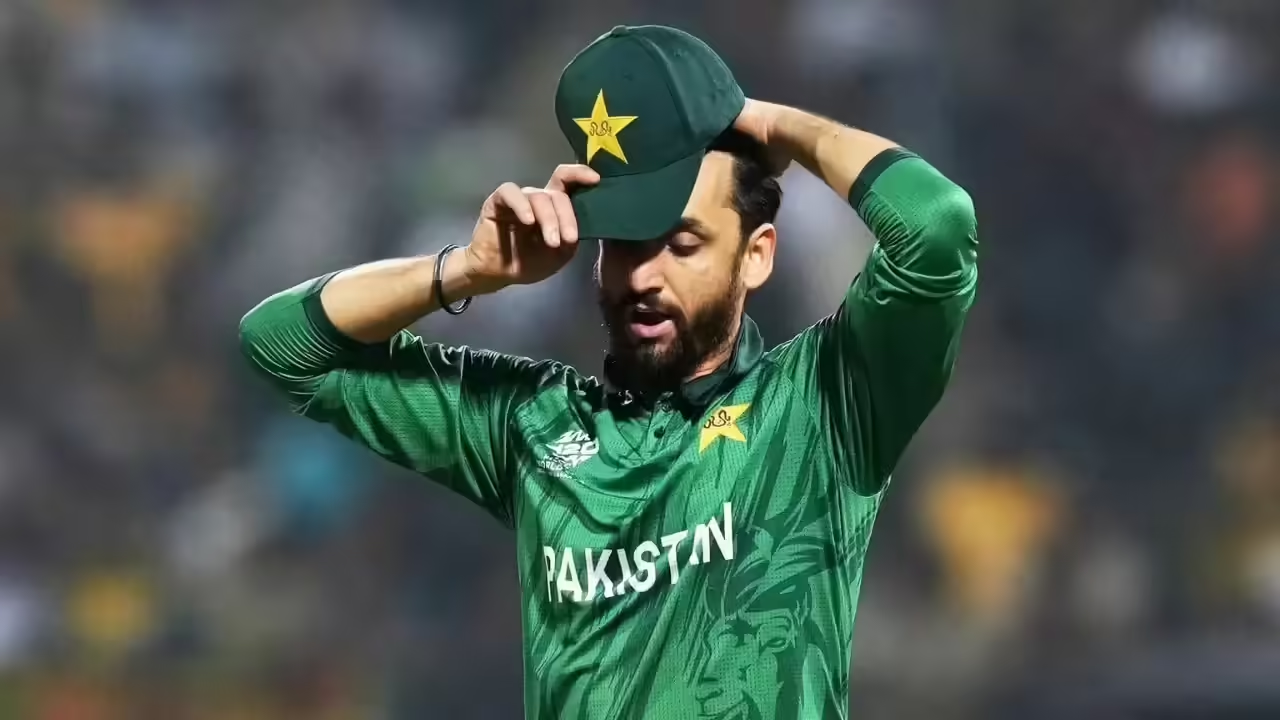
The reported decision by the PCB to fine players PKR 5 million (approx. $17,900 USD) has opened a Pandora’s box of legal and strategic questions. As the team exits the T20 World Cup 2026, the focus shifts from the pitch to the boardroom and the future calendar.
Here is an analysis of the legal hurdles the PCB faces and the road ahead for Pakistan in the next global cycle.
Part 1: The Legal Minefield – Can the PCB Actually Fine Players?
While PCB Chairman Mohsin Naqvi is reportedly determined to enforce accountability, legal experts and former board members suggest the board is on shaky ground.
1. The Missing Clause
The most significant hurdle is the Central Contract itself. Standard player contracts usually include clauses for disciplinary breaches (e.g., code of conduct violations, late-night outings, or public outbursts). However, they rarely contain a "performance-based fine" clause.
- The Precedent: Historically, boards have "demoted" players in contract categories or dropped them from the squad, but direct salary deductions for losing a match are unprecedented and potentially illegal under labor laws.
- Legal Challenge: If the PCB proceeds, players could move the court or seek intervention from the International Federation of Cricketers' Associations (FICA).
2. Performance vs. Discipline
Legally, "underperformance" is subjective. While a 61-run loss to India is a poor result, proving it was a breach of contract is difficult.
The "Farhan" Exception: The fact that some reports suggest exempting top performers like Sahibzada Farhan actually weakens the PCB’s legal position. It admits that the "team failure" wasn't universal, making a blanket fine on the rest of the squad look arbitrary and discriminatory.
3. The Method of Deduction
Reports suggest the PCB won't ask for cash but will deduct the amount from monthly salaries or match fees. In many jurisdictions, unauthorized deductions from earned wages are a violation of employment rights unless explicitly agreed upon in writing beforehand.
Part 2: Qualification Scenarios – The Road to 2027
With the 2026 T20 World Cup over for Pakistan, the focus shifts to the ICC Men’s Cricket World Cup 2027 (ODI format), which will be co-hosted by South Africa, Zimbabwe, and Namibia.
1. Direct Qualification for 2027 (ODI)
Unlike the T20 format, the ODI World Cup is expanding to 14 teams.
- The Hosts: South Africa and Zimbabwe qualify automatically as Full Member hosts. (Namibia, despite being a co-host, must go through the standard African qualification route).
- The Rankings Race: The top 8 teams in the ICC ODI Rankings (excluding the hosts) as of March 31, 2027, will qualify directly.
- Pakistan’s Current Standing: Pakistan is currently ranked 4th in the world in ODIs. Despite the T20 slump, their ODI form has remained relatively stable. To avoid the humiliation of a "Qualifier" tournament, they must remain in the top 10 (since SA and Zimbabwe are already in).
2. The Champions Trophy 2025 Fallout
Pakistan's early exit from the 2024 T20 World Cup and now the 2026 edition has created a "must-win" pressure for the 2025 Champions Trophy (which Pakistan is scheduled to host). Success here is vital for maintaining their ranking points and avoiding a slide that could jeopardize their 2027 direct entry.
3. T20 World Cup 2028
By reaching the Super Eight in 2026, Pakistan has likely secured automatic qualification for the 2028 T20 World Cup (to be hosted by Australia and New Zealand). The ICC usually grants direct entry to the top 8 teams from the previous edition.
Summary Table: Pakistan’s Future Outlook
| Category | Status / Scenario | Key Challenge |
|---|---|---|
| Contract Fines | Potentially illegal; lacks contract clause. | Possible player strikes or legal battles. |
| 2027 ODI WC | Likely direct qualification (Ranked 4th). | Must maintain ODI consistency in 2026-27. |
| Leadership | Reports suggest a major overhaul. | Finding a captain to bridge the "performance gap." |
| 2028 T20 WC | Qualified (via Super Eight finish). | Rebuilding a middle order that can score on fast tracks. |
Conclusion: A Dangerous Precedent
The PCB is at a crossroads. While the public demands "blood" after repeated failures, financial penalties could lead to a toxic relationship between the board and its stars. If the fines are enforced, it may lead to a mass exodus of players toward the lucrative global T20 franchise circuit, where they are protected by standard commercial contracts.