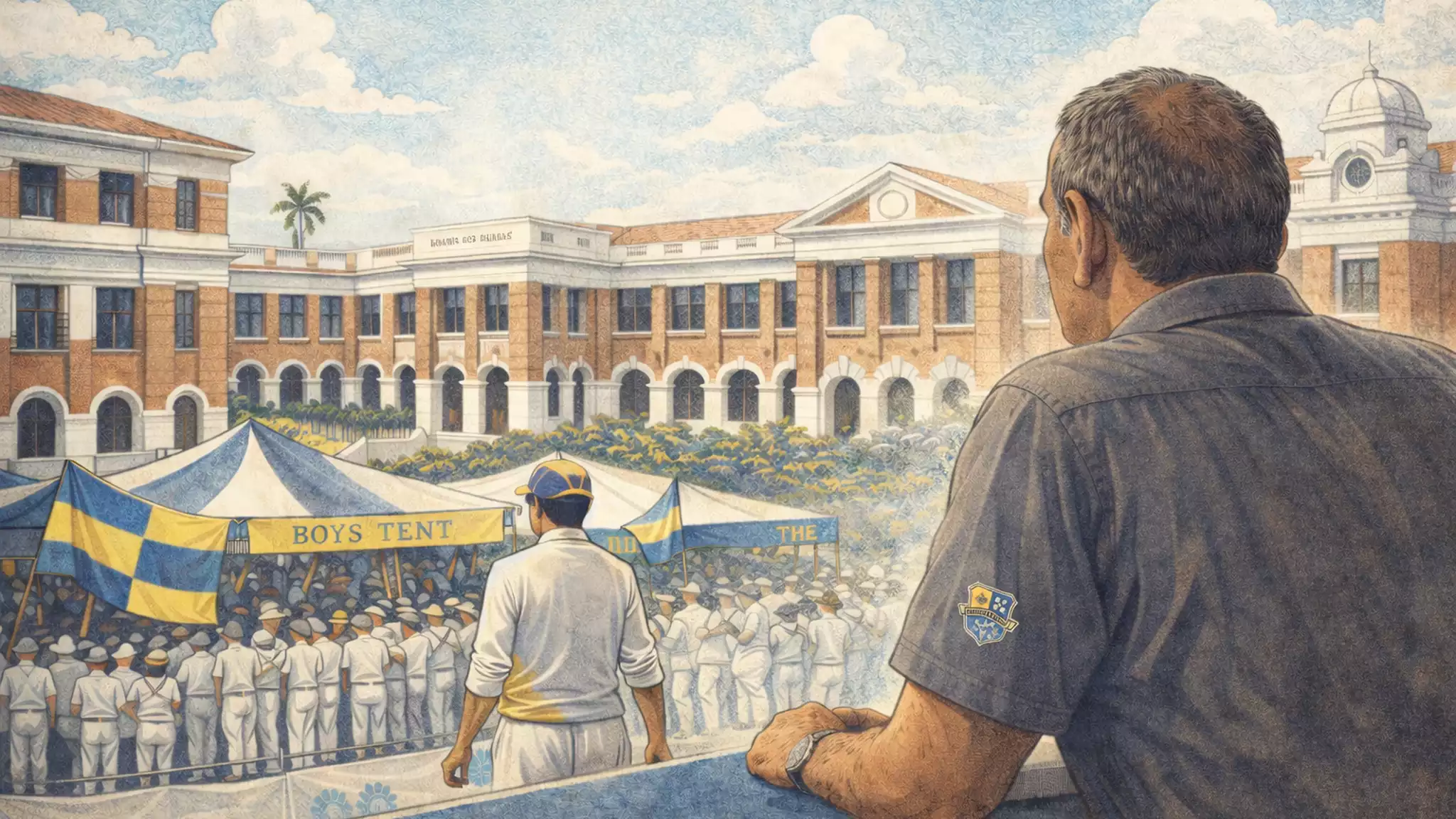
It takes more than just a love for sports to keep a tradition alive for nearly a century and a half. In Sri Lanka, the "Battle of the Blues" is not just a cricket match; it is a 147-year-old heartbeat that has never skipped a beat—not for war, and not even for a global pandemic.
At the center of this massive operation is Ramesh Abeywickrama. A former student of Royal College (Class of 1985), Ramesh’s life revolves around this three-day encounter every year. Last year, his doctor told him to slow down after a heart scare. He left his high-stress job at a top accounting firm for a steadier role at a tech company. But before he even signed his new contract, he had one non-negotiable condition: he needed time off from mid-February to mid-March.
Ramesh wasn't asking for a vacation. He was asking for time to organize the Royal-Thomian Cricket Encounter.
What is the Battle of the Blues?
The Battle of the Blues is an annual cricket match between two of Sri Lanka's most prestigious schools: Royal College and S. Thomas’ College. It is the second-longest uninterrupted cricket match series in the world, older than many modern nations.
Ramesh serves as the Co-Chairman of the organizing committee. The structure is unique: one representative from Royal and one from S. Thomas’ lead a team of over 50 volunteers. They handle everything from multi-million rupee sponsorships and high-level security to the tiny details of ticket printing.
Surviving the Impossible: War and Peace
The most impressive part of this rivalry is its endurance. Between 2007 and 2009, Sri Lanka’s civil war was at its peak. Colombo was a city under constant threat, yet the match went on.
"The stadium felt like a fortress," Ramesh recalls. The Singhalese Sports Club (SSC), usually a place of celebration, was filled with anti-aircraft guns and armed soldiers. Because the families of the country’s top leaders—the President and Prime Minister—often attended, security was at an all-time high. Spectators were moved in special buses, each one searched thoroughly. Even with the threat of violence looming, the tents went up, the bands played, and the first ball was bowled right on time.
The Silent Challenge of COVID-19
A decade later, a different kind of enemy arrived: the pandemic. In March 2020, as the world began to lock down, the match proceeded just before the full danger was realized. It turned out that one of the attendees was among the country's first confirmed COVID-19 cases.
The backlash was fierce, but the organizers didn't give up on the tradition. For the next two years, they operated in "bubbles."
- Back-up Teams: Each school prepared two full cricket teams. If one player tested positive, the entire first team would isolate, and the second team would step in.
- Closed Doors: In 2021, the 142nd match was played in an empty stadium, a haunting contrast to the usual thousands of cheering fans.
"When we are in that committee room, we aren't rivals," Ramesh says. "We are caretakers of a tradition. If one school struggles, the other steps up. Responsibility comes before the rivalry."
Two Schools, One Network
While the schools compete fiercely on the field, their alumni networks are deeply intertwined.
- Royal College: A government-funded school that draws students from all walks of life.
- S. Thomas’ College: An Anglican private school known for its exclusive shoreline campus.
During the "Big Match" weekend, the differences are visible. Royal’s student tent is much larger because they have more students. Old Boys’ tents are filled with laughter, music, and famous faces—including former Presidents and Prime Ministers. Undercover police often patrol to ensure students aren't sneaking into the alumni areas.
Outside the stadium, the local tuk-tuk drivers will tell you: "If you go to these schools, you’ll always find a job. You’ll never go hungry." The rivalry divides the tents in March, but the "Royal-Thomian" connection runs the country’s business and political spheres for the rest of the year.
The Fine Details of History
Ramesh is meticulous about the tradition. He points to his shirt, which features the logos of both schools. "Royal is blue and gold. S. Thomas’ is blue and black," he explains. Even the font on the tickets must be the specific shade of blue. They never let sponsors change these historic colors for branding.
As the 147th edition approaches, Ramesh is busy signing checks, clearing invoices, and managing a ringing phone. The chief guest this year will be Ranjan Madugalle, a former Royalist and legendary ICC match referee.
The Heart of the Matter
Once the final wicket falls and the tents are packed away, Ramesh will go back to his spreadsheets and his tech job in Malabe. The "March madness" will fade, and his pulse will return to normal.
But when next February rolls around, he will have that same conversation with his boss. He will take his half-days and give his full attention to the game. For Ramesh, and thousands like him, the Battle of the Blues is the one thing that makes the heart beat a little faster—and they wouldn't have it any other way.
Quick Facts: The Battle of the Blues
| Feature | Details |
|---|---|
| Established | 1879 |
| Duration | 3 Days |
| Venue | SSC Grounds, Colombo |
| Nickname | The Big Match |
| Uninterrupted | 147 Years |
The Evolution of the Big Match
The match has evolved from a simple school game into a national festival. The "Papare" bands—brass-heavy musical groups—are now a staple of Sri Lankan cricket culture, but they started right here at the Royal-Thomian. The "tents" around the boundary have become symbols of social status and lifelong friendships.
Despite the modern commercialization, the core remains the same: eleven boys from each side giving everything for the honor of their crest. As Ramesh says, "We just want a good game and to keep the history going."